Roofing
A step-by-step insurance claim roadmap, run by someone who will still be here next spring.
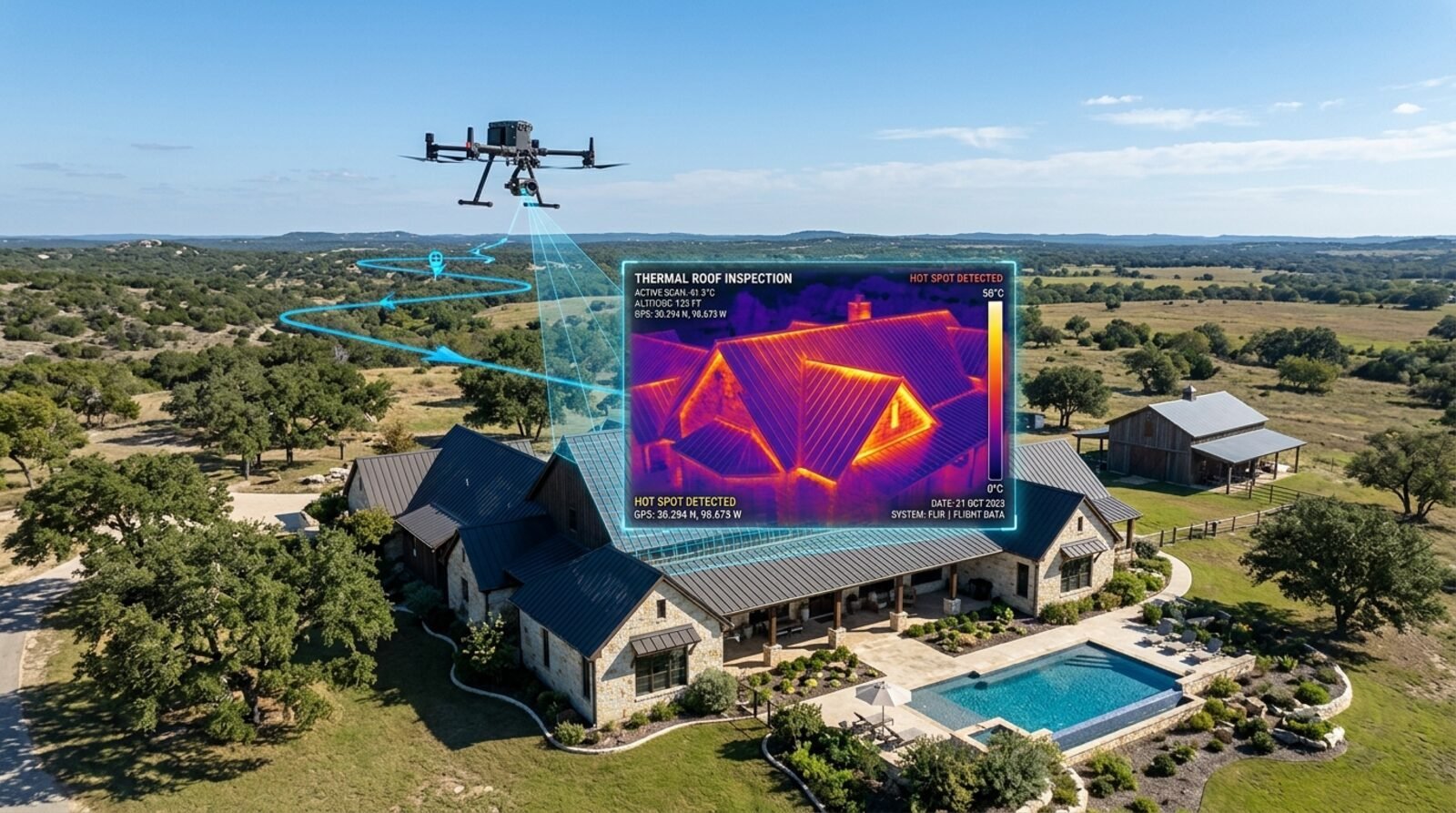
Drone-documented inspections, a written damage report your adjuster can actually use, and direct coordination on the roof with the adjuster at the time of inspection. We do not ask you to file before anyone has looked at your roof.
4KDrone imagery per slope
On-siteAdjuster meeting
WrittenDamage report, itemized
Class 4Rebuilt to the A1 standard
What should I do first after a hail storm in the Hill Country?
Get the roof documented before you file. A claim filed without evidence can be denied and still shows on your loss history. The sequence that works: note the storm date, photograph ground-level evidence (dented gutters, downspouts, screens, AC condenser fins), get a professional inspection with dated imagery, and only then file — with a written report in hand and someone available to meet your adjuster on the roof.
How to tell us apart from a storm chaser
After a hail event, this region fills with out-of-state crews. Some are competent. Many are gone before the first leak shows up, and the warranty goes with them. The tells are consistent:
They knock the day after the storm with out-of-county plates. They ask you to sign a "contingency agreement" or an assignment of benefits on the doorstep. They offer to waive or absorb your deductible — that is insurance fraud in Texas, and it makes you a party to it. They quote from the ground without ever going up. They have no physical local address.
Our office is at 3618 Barrington St, San Antonio, TX 78217. It is a building you can drive to, and it will be there after the next storm season. That is deliberate — a permanent local address is the cheapest verification you have.
What is actually covered
Two things get confused constantly, so plainly:
Functional damage — fractured shingle mat, granule loss exposing asphalt, punctures, torn or displaced material, damaged flashing — is a covered loss because it shortens the roof's waterproofing life.
Cosmetic damage — denting on a metal panel that still sheds water perfectly — may be excluded, especially if you carry a cosmetic-damage endorsement in exchange for a lower premium. Check your policy declarations before assuming either way.
Also check whether you have replacement cost value (RCV) or actual cash value (ACV) coverage on the roof, and whether your wind-and-hail deductible is a flat dollar amount or a percentage of the dwelling limit. On a percentage deductible, a $400,000 home at 2% means the first $8,000 is yours. Knowing that number before you file changes whether filing makes sense at all.
Get My Instant Satellite Quote
Real satellite measurement of your roof — a price band in about two minutes, no sales visit required.
Locating your parcel…
Measuring from public satellite recordsInsurance claim roadmap
Eight steps, and you stay the one in control of the claim.
Texas law puts the policyholder in charge of filing. Our job is documentation, presence at the inspection, and a scope that matches what the roof actually needs.
Record the storm date and ground evidence
Before anything else, write down the date and photograph what is at eye level: dented gutter aprons, bruised downspouts, torn window screens, dinged AC condenser fins, splatter marks on the deck. Soft-metal damage establishes stone size and is the evidence adjusters trust most, because it cannot be faked or aged.
Free documented inspection — drone plus hands-on
We fly each slope at 4K for a dated overhead record, then physically walk what is safe to walk. Hail bruising on asphalt often does not read from the ground or from a photo: it is a soft spot you feel, with granule loss and a fractured mat underneath. We chalk-mark test squares and count strikes per square, which is the metric an adjuster uses to decide repair versus replacement.
Straight answer on whether you have a claim
You get a written report with the imagery, strike counts, and our read. If the damage is cosmetic or below your carrier's threshold, we say so and we do not file. Talking a homeowner into a doomed claim is how deductibles get spent and loss histories get dinged for nothing.
You file — the policyholder, not the contractor
You call your carrier and open the claim. We give you the report, the storm date, and the language to use. Any contractor who offers to file on your behalf, or to "handle the insurance company for you," is describing unlicensed public adjusting, which is illegal in Texas.
We meet your adjuster on the roof
This is the step that decides the outcome. We are physically present at the inspection with our documentation, walking the same slopes, so damage does not get missed and the scope does not get written short. Adjusters cover an enormous territory after a regional storm and are working fast; an informed second set of eyes on the roof is legitimate and expected.
Scope review and supplement if needed
We read the carrier's scope line by line against what the job actually requires — code-required decking, drip edge, ridge vent, valley metal, steep-and-high charges. Where the estimate is short, we file a documented supplement with photos and the code citation. This is normal claims process, not a fight.
Build it back to the A1 standard
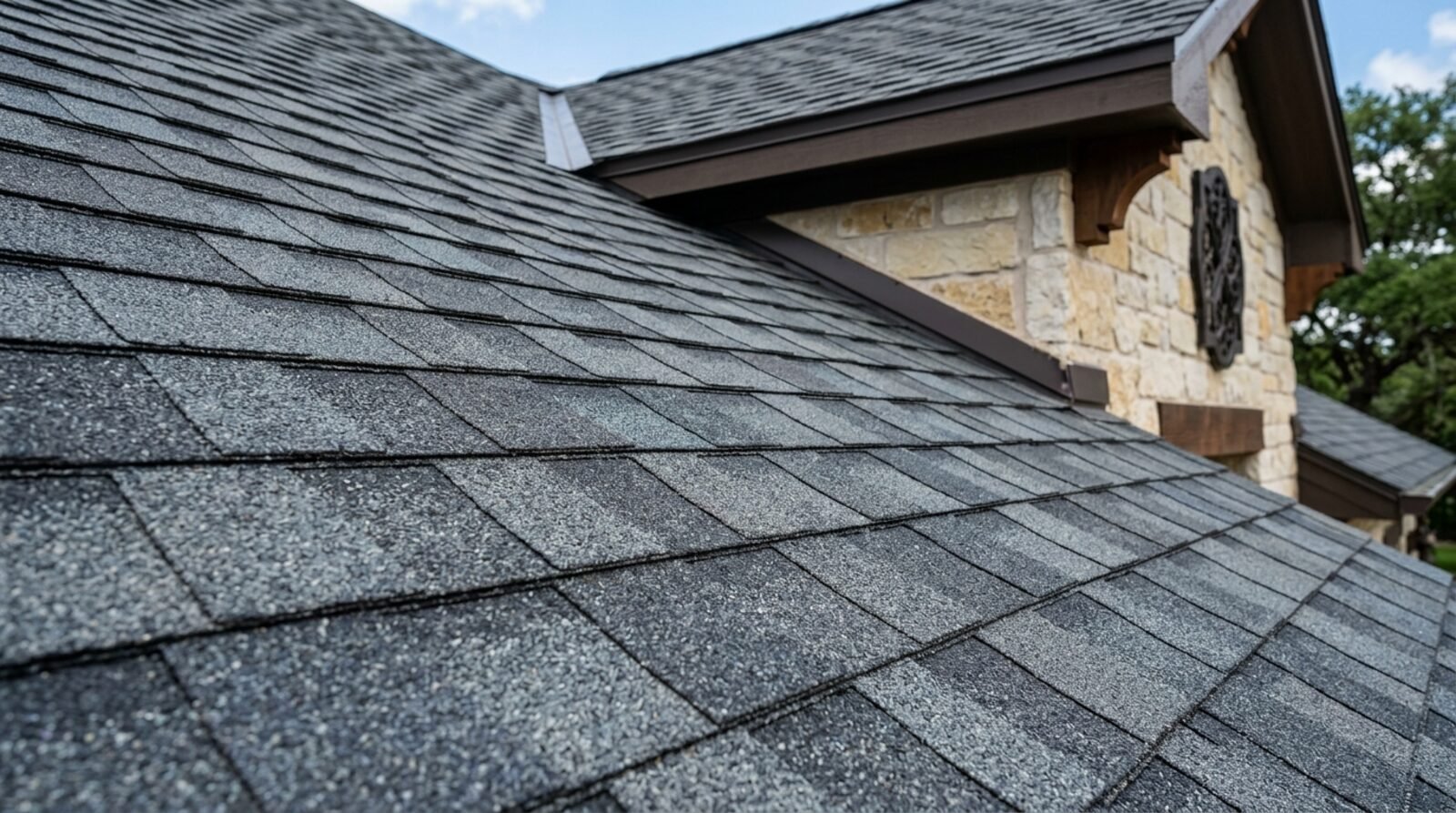
The rebuild uses Class 4 impact-resistant shingles and synthetic underlayment. If your carrier's scope funded a lesser assembly, you see exactly what the upgrade costs as a separate line — no bundling it into the claim number so it disappears.
Final documentation and your premium credit
You receive the completion package: itemized invoice, the UL 2218 Class 4 certificate, warranty registration, and dated final photos. Send the certificate and invoice to your agent to pursue the impact-resistant roof credit on your next renewal.
Texas Insurance Code prohibits a contractor from acting as a public adjuster on a property they are contracting to repair, and from paying, waiving or rebating any part of your deductible. We do neither. Coverage determinations are made by your carrier under your policy.
Bid comparison
Where the cheap bid is actually cheaper.
Two proposals for the same job usually differ on these lines, not on brand. Ask any bidder to put their answer in writing.
| Common low-bid approach | The A1 specification |
|---|---|
| Files the claim for you | You file — that is the law in Texas |
| Offers to absorb your deductible | Deductible is yours; anything else is fraud |
| Quotes from the driveway | Drone imagery plus a hands-on walk |
| Out-of-state plates, no office | Permanent Hill Country address |
Storm & Hail Damage questions
Answered plainly.
Will filing a hail claim raise my premium?
A weather claim is a non-fault loss and does not raise your rate the way an at-fault claim does, but it does enter your CLUE loss history, and carriers do consider claim frequency at renewal in Texas. That is exactly why we tell you when you do not have a claim worth filing.
How long do I have to file after a storm?
Most Texas policies require prompt notice and many set an outside limit of one or two years from the date of loss — read your policy. Practically, file sooner: proving which of several storms caused the damage gets harder every season, and unrepaired damage can trigger a maintenance-neglect denial.
The adjuster approved a repair, but I think I need a full roof. What now?
That is what the supplement process is for. We document why a spot repair will not restore the assembly — strike density across multiple slopes, code-required decking or ventilation work, discontinued shingle that cannot be matched — and submit it with photos and citations. Carriers revise scopes on evidence regularly.
Do you do free inspections?
Yes, and with no obligation to file or to hire us. You get the imagery and the written report either way.
Can you tarp my roof tonight?
Emergency tarping to stop active water intrusion is a normal first step and is typically covered by your policy as mitigation. Call the office line and describe what you are seeing inside.