Roofing
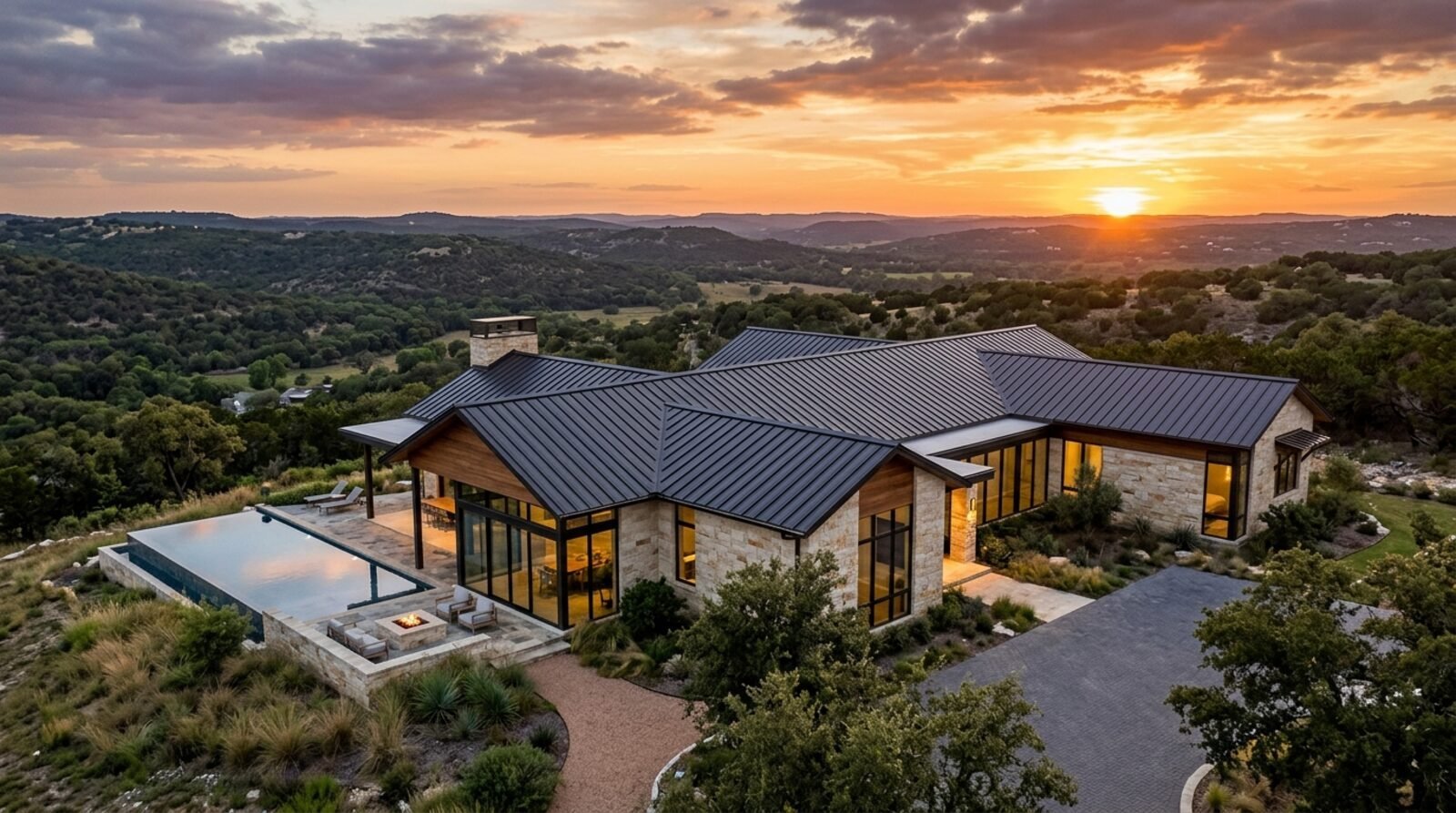
Standing seam metal, specified for a 40-to-70-year service life.
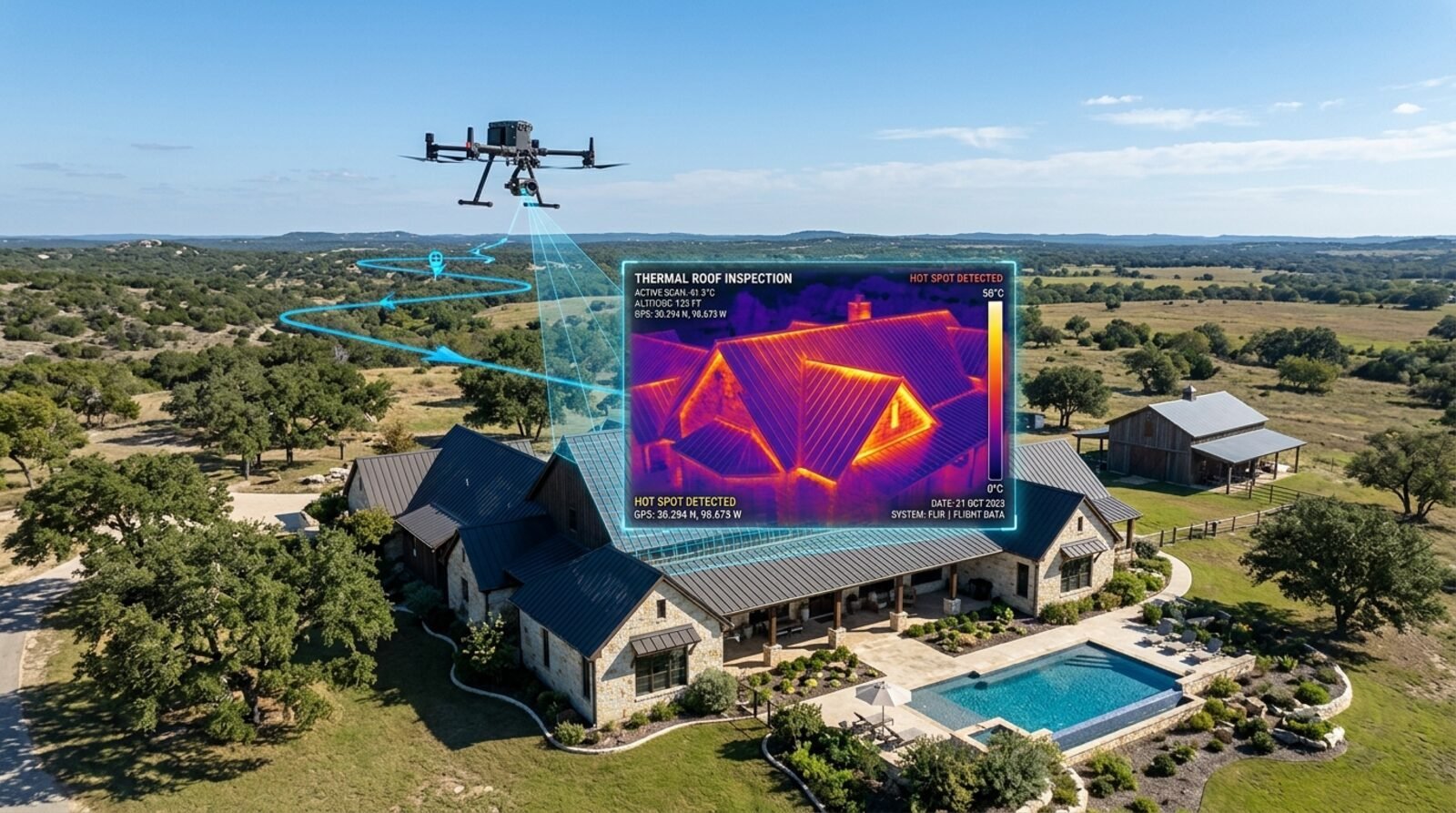
A 24-gauge concealed-fastener roof is the longest-lived assembly we install, and in a climate that runs 100°F+ for weeks at a time it is also the coolest. Reflective finishes over a ventilated deck cut attic temperatures by up to 40°F.
40–70Year service life
40°FAttic temp reduction
24gaPanel standard
Class 4Impact rating available
How long does a standing seam metal roof last in the Texas Hill Country?
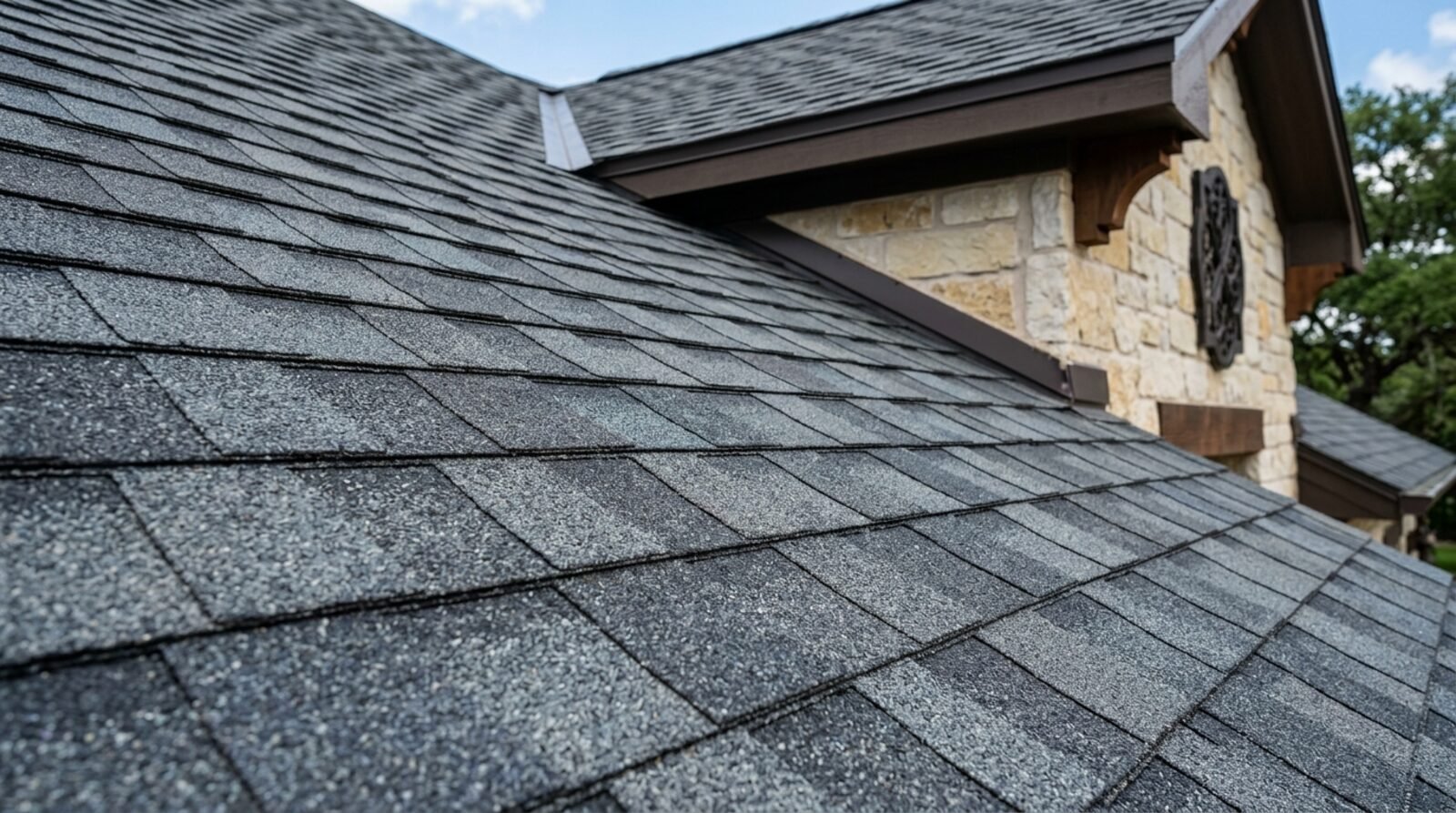
40 to 70 years for a 24-gauge standing seam system with a Kynar 500®/PVDF finish — roughly two to three times the 20-to-25-year real-world life of architectural asphalt in this climate. The finish, not the steel, is usually the limiting factor: PVDF coatings carry 30-to-40-year chalk-and-fade warranties, and the panel underneath is Galvalume-coated steel that does not granule-shed the way asphalt does under UV.
Why metal behaves differently here
Three regional loads decide roof lifespan in the Hill Country, and metal answers all three differently than asphalt does.
UV and heat. Asphalt is a petroleum product. Sustained triple-digit surface temperatures drive off the volatile oils that keep the mat flexible, and the granules that protect it start shedding. A metal panel has no organic binder to lose. It expands, contracts, and reflects.
Thermal cycling. A 40°F daily swing works every joint on a roof. Standing seam is designed for that movement: the panels are attached with concealed clips that let each run slide as it grows and shrinks, so the movement is absorbed by the assembly rather than by fastener holes.
Hail. Metal dents; it very rarely punctures. That distinction matters for insurance. Cosmetic denting on a metal roof is a finish issue, not a leak, and many carriers now offer a cosmetic-damage exclusion at reduced premium precisely because the roof keeps performing.
The 40°F attic claim, explained honestly
You will see "reduces attic temperature by up to 40°F" on every metal roofing site in Texas, including this one. Here is what actually produces that number, because it is not the metal by itself.
A dark asphalt roof in direct August sun reaches 160–170°F at the surface and conducts that heat straight into the deck. Attic air behind it commonly measures 130–150°F. A reflective metal panel installed over a ventilated air gap — either a batten system or a properly vented deck with intake at the soffit and exhaust at the ridge — reflects a large share of the solar load and lets the rest convect out before it reaches the sheathing.
Installed flat and unvented over old shingles, a metal roof will not deliver that. The reduction comes from the system: reflective finish, air gap, balanced ventilation, and adequate insulation at the ceiling plane. We quote all four, and if your soffit intake is blocked or undersized we tell you before installation instead of after.
Rainwater catchment compatibility
A large share of the properties we work on outside Dripping Springs, Wimberley, and Blanco collect roof runoff for potable or irrigation use. Not every metal roof is appropriate for that.
We specify Galvalume or PVDF-finished panels for catchment roofs and avoid exposed-fastener assemblies with sealant washers that break down into the water stream. Lead-containing flashing, tar-based patch products, and copper on the same run as galvanized components are all off the table on a catchment system.
If you are on catchment, tell us at the quote stage. It changes the flashing, the sealant, and sometimes the gutter alloy.
Specification
| Item | What we install |
|---|---|
| Panel | 24-gauge Galvalume steel, 16" nominal coverage |
| Profile | Snap-lock or mechanically seamed standing seam |
| Fastening | Concealed clip — no exposed penetrations in the field |
| Finish | Kynar 500®/PVDF, 30–40 yr chalk & fade warranty |
| Underlayment | High-temp synthetic rated for metal service temps |
| Ventilation | Balanced soffit intake + vented ridge, sized to attic volume |
| Substrate | Deck inspected and re-nailed; rot replaced before dry-in |
Get My Instant Satellite Quote
Real satellite measurement of your roof — a price band in about two minutes, no sales visit required.
Locating your parcel…
Measuring from public satellite recordsBid comparison
Where the cheap bid is actually cheaper.
Two proposals for the same job usually differ on these lines, not on brand. Ask any bidder to put their answer in writing.
| Common low-bid approach | The A1 specification |
|---|---|
| Exposed-fastener R-panel sold as "standing seam" | Concealed-clip standing seam, no field penetrations |
| Metal laid flat over existing shingles | Tear-off, deck inspection, high-temp underlayment |
| Ventilation ignored | Intake and exhaust sized and documented |
| "Lifetime" verbal warranty | Written finish + workmanship terms in the contract |
Metal Roofing questions
Answered plainly.
Will a metal roof make my house hotter?
No — the opposite, when it is installed as a ventilated system. Reflective PVDF finishes over an air gap reduce peak attic temperatures by up to 40°F versus dark asphalt, because the panel reflects solar load instead of conducting it into the deck.
Is a metal roof loud in a Hill Country thunderstorm?
Not meaningfully. The noise people remember is from a bare metal barn roof — panel over open purlins with nothing behind it. A residential roof has solid decking, synthetic underlayment, an attic cavity, and ceiling insulation between you and the panel. Measured sound transmission is comparable to asphalt.
Can standing seam be installed over my existing shingles?
It can be, and we generally advise against it. You lose the deck inspection, you trap the old assembly's heat, and you give up the ventilated air gap that produces most of the cooling benefit. We quote tear-off as the default and price a recover only if the deck condition and code allow it.
Does metal help with hail insurance?
Often. Metal rarely punctures under Hill Country hail, and several carriers write cosmetic-damage exclusions on metal roofs at a reduced premium. Ask your agent specifically about a cosmetic hail exclusion endorsement before you assume a discount.
What does standing seam cost per square foot in this area?
The engine on this site models 24-gauge standing seam at roughly $14–$21 per square foot of roof surface, which is where Hill Country material and labor rates currently sit. Complexity — valleys, dormers, penetrations, steep pitch, second-story access — moves you within that band. Run your address for a measured number.